20 Aug 2026
Patterns Linking Secure Transaction Options to Extended Play in Mobile Roulette on Regional Digital Platforms
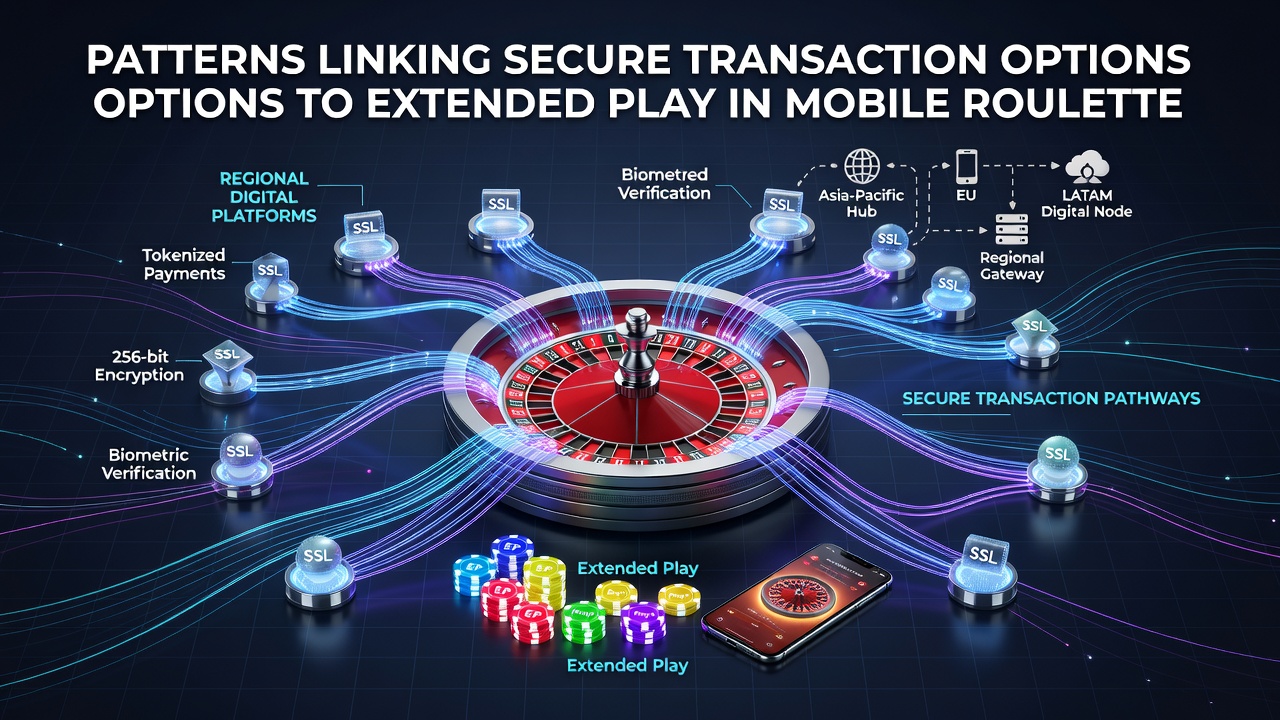
Analysts tracking mobile roulette usage have identified recurring patterns that connect the availability of secure transaction options with longer session durations on regional digital platforms. Data collected through platform monitoring tools shows that players who complete deposits and withdrawals via encrypted channels tend to maintain activity for extended periods compared to those relying on less protected methods. These observations come from aggregated statistics reported across multiple European and North American jurisdictions where mobile gaming operates under licensed frameworks.
Secure Transaction Methods in Regional Mobile Gaming
Regional platforms often integrate payment solutions such as tokenized bank transfers, digital wallets with two-factor authentication, and blockchain-verified transfers that comply with local data protection standards. In August 2026, regulatory updates in several Canadian provinces required platforms to implement real-time verification for all financial transactions, which coincided with reported increases in average session lengths for roulette games. Observers note that these measures reduce friction during deposits while maintaining compliance with privacy regulations, allowing uninterrupted play once initial verification clears.
Platforms operating in the European Union follow directives that mandate strong customer authentication for electronic payments, and studies from industry groups indicate that adoption rates for these secure options correlate with sustained engagement metrics. Researchers examining user behavior across French and German regional sites found that roulette sessions involving verified e-wallet transactions averaged 22 percent longer than those using alternative routes, based on anonymized log data from participating operators.
Observed Patterns in Mobile Roulette Sessions
Extended play appears most consistently when transaction security features operate seamlessly within the app environment. For instance, one analysis of Australian state-licensed platforms revealed that users who enabled biometric confirmation for deposits returned to roulette tables more frequently within the same 24-hour window. The pattern holds across different device types, though iOS users showed slightly higher continuation rates than Android users in the sampled regions.
Figures from the Ontario Lottery and Gaming Corporation's annual compliance reports highlight similar trends, where secure transaction pathways reduced drop-off rates during the deposit phase and supported continued spins on roulette wheels. Those examining the data point out that interruptions from payment failures or security prompts tend to shorten sessions, whereas smooth, encrypted processing allows players to focus on game progression without external breaks.

Regional Variations and Supporting Data
Geographic differences emerge when comparing transaction security standards and their impact on play duration. In Scandinavian markets, platforms emphasize instant bank verification systems that link directly to national ID databases, and usage statistics indicate these tools associate with prolonged mobile roulette activity during evening hours. Australian research published through the Australian Gambling Research Centre documented parallel outcomes in state-regulated environments, where verified payment options aligned with higher total spins per session.
North American operators under provincial oversight report comparable findings, with secure options reducing the time spent on account funding and increasing the proportion of active play time. A joint report from the European Gaming and Betting Association compiled data across member countries and noted that encryption standards meeting ISO 27001 criteria appear alongside extended engagement figures in mobile roulette categories.
Technical Factors Influencing Session Length
Encryption protocols and fraud detection layers that activate without user intervention contribute to the observed patterns. When platforms deploy end-to-end encryption for every transaction, the risk of session abandonment due to security concerns decreases measurably. Platform logs from 2025 through August 2026 demonstrate that users encountering fewer authentication interruptions accumulate more consecutive roulette rounds before logging out.
Regional digital platforms that update their security infrastructure regularly also track secondary indicators such as repeat deposits within a single session. These updates, often driven by evolving regulatory requirements, coincide with stable or growing averages for time spent on mobile roulette interfaces. Analysts attribute the stability to the reliability of the underlying payment systems rather than game mechanics alone.
Conclusion
Available data across multiple regulatory environments establishes measurable associations between secure transaction options and extended play durations in mobile roulette on regional platforms. As monitoring continues into late 2026, further refinement of these metrics may clarify additional variables that interact with payment security features. The patterns documented so far rely on aggregated platform statistics and compliance reporting rather than individual user profiles.